
Where Sheriff's Releases Go
A person leaving the Sheriff's local custody may return to the community on bond or recognizance, finish a local custodial term, or move to another jail. The person may also enter Kansas Department of Corrections, federal, or immigration custody. Those results are not interchangeable. A release code tied to bond usually means the person left the physical custody point while the case continued. A transfer means custody continued under a new agency. “Time served” addresses the term recorded by that custodian but does not rule out another warrant or hold.
The Sheriff's booking, movement, or release event is the best record of what happened at the local custody boundary. Ask for the date and time, release type, and destination. If the record identifies a receiving jail, that jail becomes the source for the next movement. If it identifies KDOC, use the state KASPER search after intake. A reference to USMS or ICE points to a separate federal trail. The Comanche County released-inmate guide compares those routes without treating a transfer as community release.
Confirm a Sheriff's Release
Start with the official Sheriff contact page. Ask whether the person remains in Sheriff's custody and, if not, whether the recorded event was a release or transport. Use the full legal name, known aliases, and an approximate booking date. Staff may limit what can be stated by phone, but the inquiry can identify the actual custodian.
- Check the official Sheriff navigation. It currently has no public roster or recent-release feed.
- Call the office and ask for the current facility or recorded destination.
- Search one person through Kansas VINE. A release or transfer alert is a custody event, not a full historical record.
- Read the Comanche County District Court case for bond, disposition, sentence, or probation orders.
- Request the Sheriff's booking and movement record when a dated, durable answer is needed.
The court file explains legal authority, while the jail event establishes when physical custody changed. A bond order alone does not show when every condition was met. Likewise, a person disappearing from VINE later does not prove release. Cross-check the agency name and event type before drawing a conclusion.
No Comanche Release Roster
The official Kansas Sheriff's site publishes no current inmate roster, booking log, 24-hour list, 72-hour list, release archive, or mugshot gallery. That is a verified absence of a public web tool, not proof that no internal records exist. It also means there is no official local claim about refresh cadence, visible fields, photo display, weekend lag, or online retention.
Broad searches often surface Comanche County pages from Oklahoma or Texas. Those systems do not describe Coldwater, Kansas custody. A commercial current-inmate page is also not a substitute for a local release event. Use the Kansas agency page, the Sheriff's record, and the Kansas court case. When checking recent activity, the 24-Hour Release List and 72-Hour Release List explain the honest person-specific fallback.
Request Comanche Release Records
The Sheriff's services and open-records page links the Kansas Open Records Act form. Requests may be delivered, mailed, or submitted through the site. Describe an existing, identifiable record. Useful details include legal name, aliases, date of birth if known, booking or arrest date range, and an agency or case number.
Name the record parts needed: booking sheet, booking photograph, custody movement log, release date and time, release type, destination, and the nonexempt part of a detainer or transfer notation. Ask for electronic copies and a cost estimate before charges are incurred. The Sheriff does not publish a fixed release-record fee or retention period. K.S.A. 45-218 requires a response by the end of the third business day, but that is not a promise of production within three days. The response may provide records, seek detail, quote fees, cite an exemption, or explain delay.
Under K.S.A. 45-221, some material may be withheld. If that occurs, ask for reasonably separable nonexempt portions and the legal basis for denial. KORA generally supplies records already kept by an agency. It does not require staff to create a custom release table or write an analysis that does not exist.
Sheriff Record Sources
The official Sheriff services page shows the agency's public-service and open-record route.
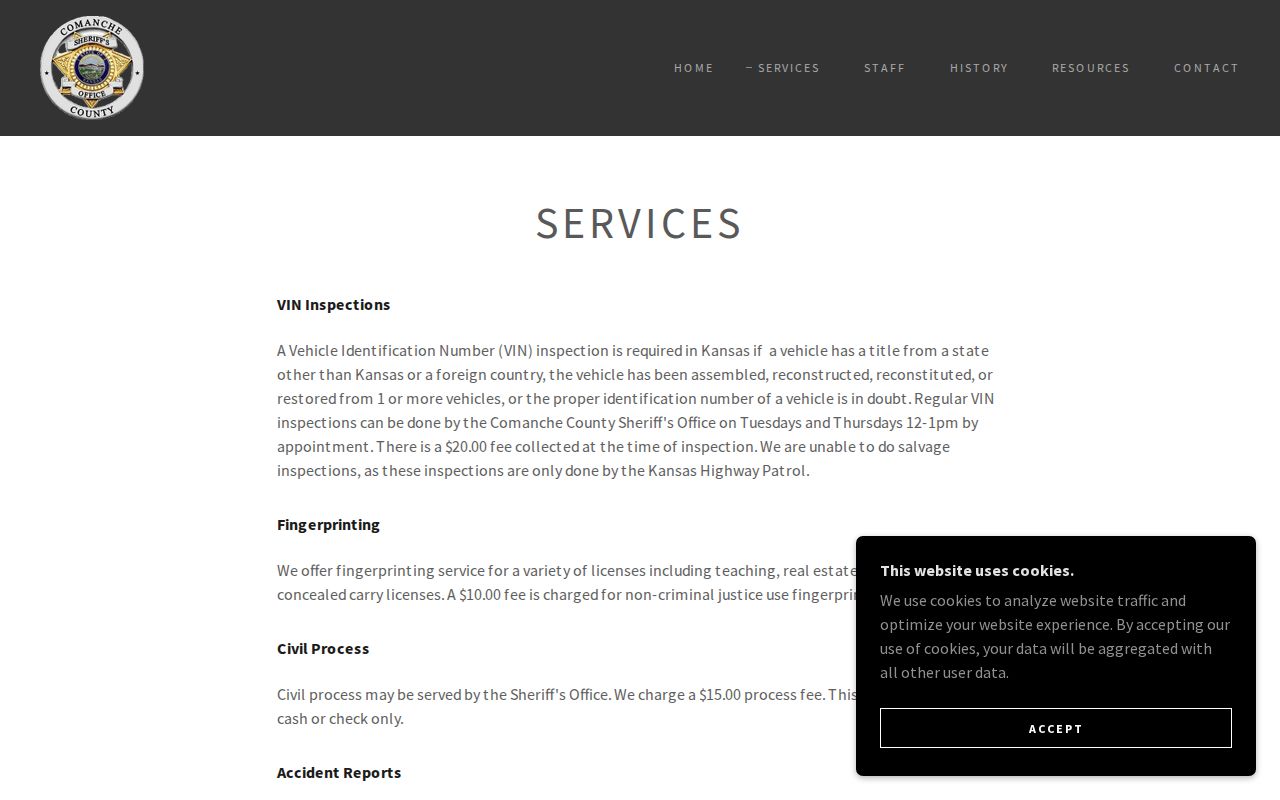
The official services route is the correct local starting point because it provides the request process without suggesting that a public release roster exists.
The linked Sheriff open-record form provides the formal path for an identifiable custody record.
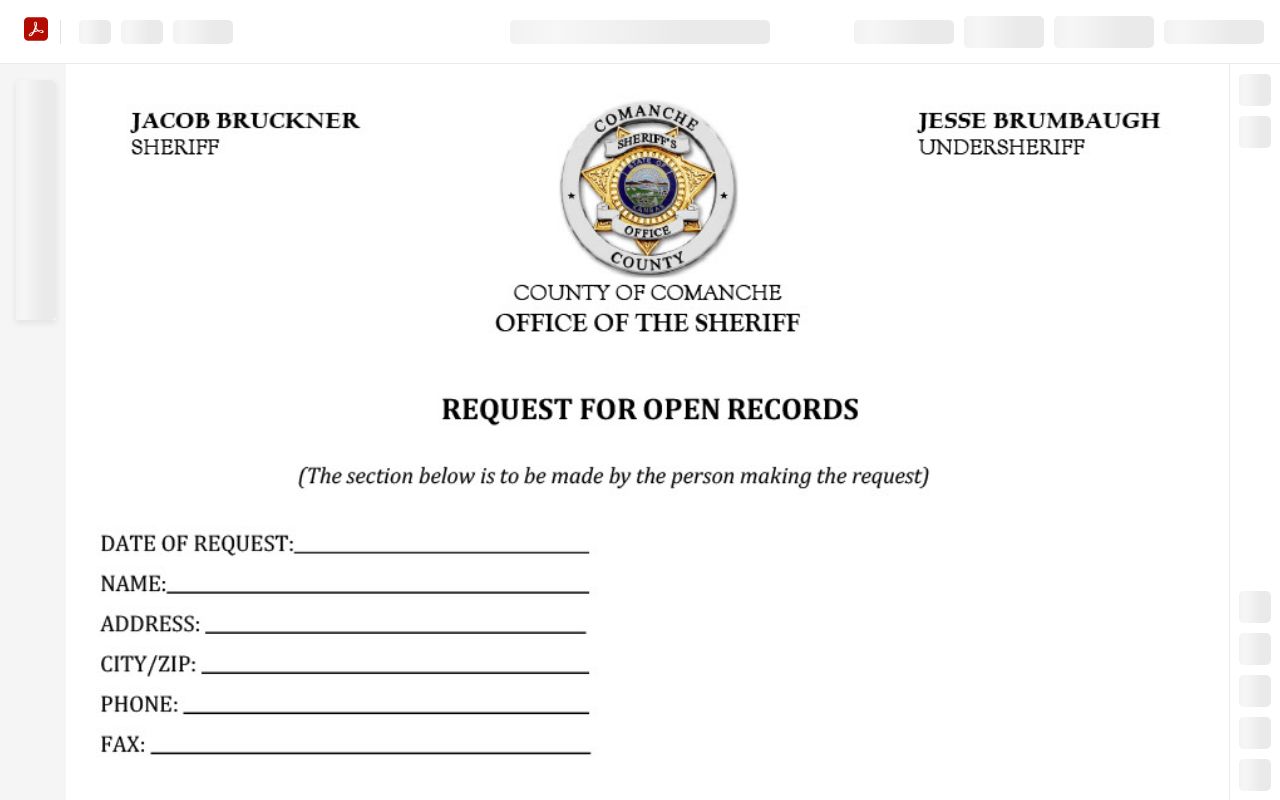
A narrow request for the movement and release fields is more useful than asking staff an open-ended question about what happened.
Sheriff Records and Contact
Comanche County Sheriff's Office
408 N. Central Avenue
Coldwater, KS 67029
Mail: P.O. Box 16
Phone: 620-582-2511
Fax: 620-582-2261
No official source reviewed states records-counter hours, release-processing hours, a public exit, a transport schedule, a capacity, or a standing jail contract. Call before travel and ask about the individual case. Do not rely on commercial directories for those facts.
Corroborate Comanche Releases
Kansas VINE covers participating county-jail custody events and can send release, transfer, or escape notices. It does not include offenders held in KDOC state prisons. Search one person through VINELink Check, verify the reporting agency, and read the exact event. The service is useful for a live custody change, but it is not promised as a lasting archive.
The Kansas District Court Public Access Portal can show bond orders, dispositions, sentences, probation events, and later orders. Comanche County is part of the 16th Judicial District. The local clerk can help with public material not available online. A court result supports the legal explanation, but the Sheriff's record remains the source for the physical release time and destination.
Match Comanche Custody Identity
Confirm identity before combining a jail event with a court case. Use the full legal name, aliases, date of birth when lawfully available, arrest period, and case number. A name alone can connect the wrong person to a release or transfer. If two records conflict, ask each originating office to explain or correct its own entry rather than choosing the more convenient result.
The durable sequence is the booking event, each movement, and the final disposition from that custodian. Keep dates and agency names attached to every step. That approach preserves the difference between leaving the Sheriff's control and leaving custody altogether.